
Hysteroscopy for Abnormal Uterine Bleeding
Changes in menstrual bleeding are among the most common reasons women see a gynaecologist. Abnormal uterine bleeding describes any bleeding that departs from a woman’s usual pattern in length, frequency, regularity or volume. Some women have very heavy periods, others bleed between cycles or for longer than normal, and some notice bleeding after menopause.
Occasional shifts can be caused by hormonal fluctuations, but bleeding that keeps recurring or has no obvious reason deserves attention. It can point to a problem inside the uterus, such as polyps, fibroids or changes in the uterine lining.
Hysteroscopy lets a gynaecologist look directly inside the uterus to find such problems and, in selected cases, treat them in the same sitting. This article explains how it works, when it is advised and what recovery involves, so that women can make well-informed choices about their reproductive health.
What Counts as Abnormal Uterine Bleeding
In adults, a typical cycle lasts 21 to 35 days and bleeding usually continues for up to seven days, although every woman differs. Marked departures from her own pattern warrant a medical check. The main forms are:
- Heavy bleeding: Blood loss that is excessive or disrupts daily life.
- Prolonged bleeding: Periods that last longer than usual.
- Irregular cycles: Periods that arrive unpredictably.
- Frequent periods: Cycles that come closer together than expected.
- Bleeding between periods: Spotting or bleeding outside the regular cycle.
- Postmenopausal bleeding: Any vaginal bleeding after menopause.
Ongoing heavy bleeding can drain the body’s iron stores and cause anaemia, leading to tiredness, weakness and dizziness.
What Can Cause It
Several hormonal and medical conditions can lie behind abnormal bleeding, and identifying the cause is essential for choosing the right treatment.
- Hormonal imbalance: Shifts in oestrogen and progesterone alter how the uterine lining builds up and sheds. Polycystic ovary syndrome (PCOS), thyroid disorders and irregular ovulation can all make bleeding unpredictable.
- Uterine polyps: These are usually harmless growths arising from the inner lining, though some need further testing. They may cause heavy or irregular bleeding, spotting between periods or difficulty conceiving.
- Uterine fibroids: Non-cancerous growths in or around the uterus. Depending on size and position, they can cause heavy periods, pelvic pressure, frequent urination or fertility problems. Those pressing into the uterine cavity can sometimes be assessed or treated hysteroscopically.
- Endometrial changes: Conditions such as endometrial hyperplasia, a thickening of the lining, can cause bleeding. Further tests may be needed to rule out precancerous changes or cancer, especially after menopause or in women with risk factors.
- Other causes: Bleeding disorders, certain medicines, infections and pregnancy-related complications can also be responsible, which is why a thorough assessment matters.
What Is Hysteroscopy?
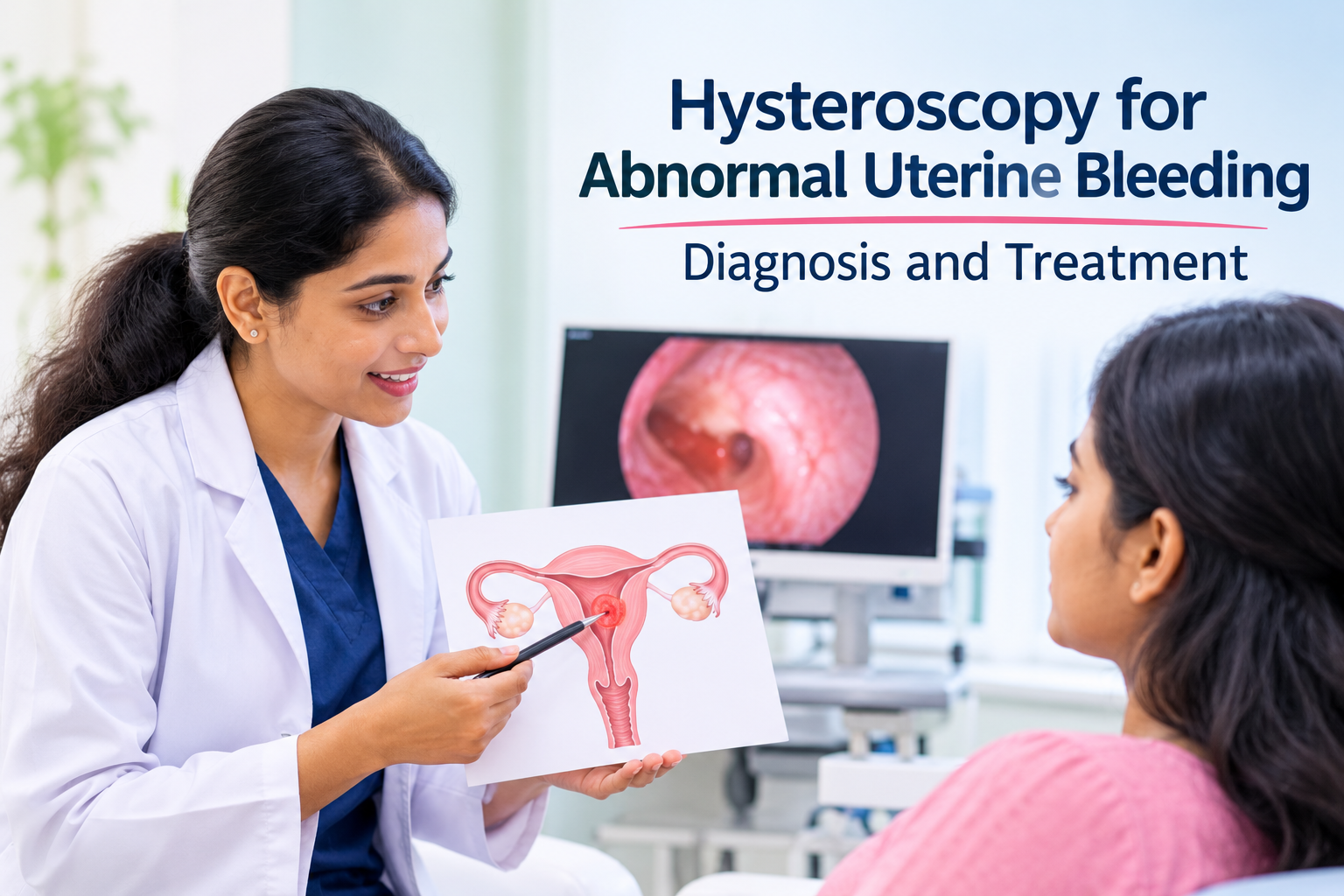
Hysteroscopy is a minimally invasive procedure for viewing the inside of the uterus. A slim instrument called a hysteroscope, which carries a light and a camera, is passed gently through the vagina and cervix, and the uterine lining appears on a monitor. Because it goes through the natural passage, it generally requires no cuts on the abdomen. It may be done purely to diagnose or also to treat certain abnormalities.
How It Helps Diagnose Abnormal Bleeding
Hysteroscopy gives a direct view of the uterine cavity and can reveal structural problems that routine examinations may miss, including:
- Polyps
- Fibroids bulging into the cavity
- Scar tissue or adhesions
- Other cavity abnormalities
- Certain changes in the lining
If something looks abnormal, the doctor may take a biopsy or remove the growth for laboratory testing, leading to a more accurate diagnosis and treatment plan.
Two Types of Hysteroscopy
Diagnostic hysteroscopy looks for the cause of abnormal bleeding. It may be advised for repeated heavy periods, unexplained spotting, persistent irregular bleeding, bleeding after menopause, suspected polyps or fibroids, or worrying ultrasound findings.
Operative hysteroscopy treats problems found during the examination, such as removing polyps, removing selected fibroids within the cavity, treating adhesions, removing abnormal tissue or correcting certain cavity abnormalities. The approach depends on the size, location and nature of the problem.
How the Procedure Is Carried Out
The details depend on whether the procedure is diagnostic or operative.
- Consultation: The gynaecologist reviews menstrual history, symptoms, past conditions and current medicines.
- Preliminary tests: A pelvic ultrasound, blood tests or an endometrial sample may be suggested.
- Preparation: The procedure and anaesthesia choices are explained. Diagnostic hysteroscopy can sometimes be done without general anaesthesia, whereas operative procedures may need more.
- Examination: The hysteroscope is guided through the cervix, and a suitable fluid expands the cavity so the surface can be inspected.
- Treatment if needed: Fine instruments passed through the hysteroscope can remove or manage an abnormality.
- Recovery and follow-up: The patient is observed for a suitable period and given guidance on aftercare, medicines and follow-up visits.
Benefits of Hysteroscopy
- Direct view: The uterine cavity can be examined first-hand rather than guessed at from symptoms.
- Accurate diagnosis: Structural causes can be identified, and tissue samples taken when required.
- Minimally invasive: The instrument enters through the natural opening, so abdominal incisions are generally unnecessary.
- Diagnosis and treatment together: In selected cases, such as polyps, the problem can be found and removed in one procedure.
- Quicker return to routine: Many patients resume usual activities fairly soon, depending on the procedure, anaesthesia and personal recovery.
Hysteroscopy and Laparoscopy: What Sets Them Apart
Both are used in gynaecology but serve different purposes.
- Hysteroscopy: Examines the inside of the uterus through the cervix. It helps detect polyps and cavity abnormalities and can treat selected conditions within the uterus.
- Laparoscopy: Examines the pelvic and abdominal organs through small abdominal incisions. It helps diagnose endometriosis, ovarian cysts and other pelvic conditions and can treat selected problems of the pelvic organs.
Either or both may be suggested, depending on the diagnosis. When surgical evaluation of pelvic conditions is needed, Gynaecological Laparoscopy in Kollam may be a suitable option if a qualified gynaecologist recommends it.
Recovery After Hysteroscopy
Recovery varies with the type of hysteroscopy. Mild period-like cramps and light bleeding or spotting for a few days are common and usually ease gradually. To help healing:
- Rest adequately and avoid strenuous activity until you feel comfortable
- Take medicines exactly as prescribed
- Use sanitary pads for light bleeding
- Ask your doctor about sexual activity, tampons and vaginal products
- Keep your follow-up appointment
Contact your doctor if you develop heavy bleeding, severe abdominal pain, fever, foul-smelling discharge or worsening discomfort.
When to See a Gynaecologist
Consider a consultation if you notice:
- Periods that are regularly heavier than usual
- Bleeding for more than seven days
- Repeated spotting between periods
- Severe menstrual cramps
- Unexplained pelvic discomfort
- Fatigue or dizziness suggesting anaemia
- Any bleeding after menopause, even once, which needs prompt evaluation
Women with persistent symptoms can discuss diagnostic options, including hysteroscopy and Gynaecological Laparoscopy in Kollam, depending on the suspected cause.
Women’s Healthcare at Samad Hospital
Women’s reproductive health calls for timely attention, accurate diagnosis and a suitable treatment plan. Bleeding that is persistent, unusually heavy or accompanied by other symptoms should not be dismissed as normal. Samad Hospital recognises the importance of women’s healthcare and of properly evaluating gynaecological concerns. A consultation with a qualified gynaecologist can clarify the cause of abnormal bleeding and the diagnostic and treatment choices available.
For those looking into Gynaecological Laparoscopy in Kollam, knowing what minimally invasive procedures exist helps with informed decisions. The best option depends on individual symptoms, examination findings and medical needs.
Conclusion
Abnormal uterine bleeding can affect comfort, emotional well-being and daily life. Hormonal changes and common gynaecological conditions may explain it, but persistent bleeding needs proper evaluation. Hysteroscopy helps doctors examine the uterine cavity, pinpoint abnormalities and treat selected conditions, and early diagnosis supports better treatment and may prevent complications.
If you have unexplained, heavy or irregular bleeding, see a gynaecologist rather than ignoring it. Timely guidance and personalised care protect your reproductive health and overall well-being.
Leave a Comment