
PCOS & Hormonal Imbalance | Samad Hospital
Introduction
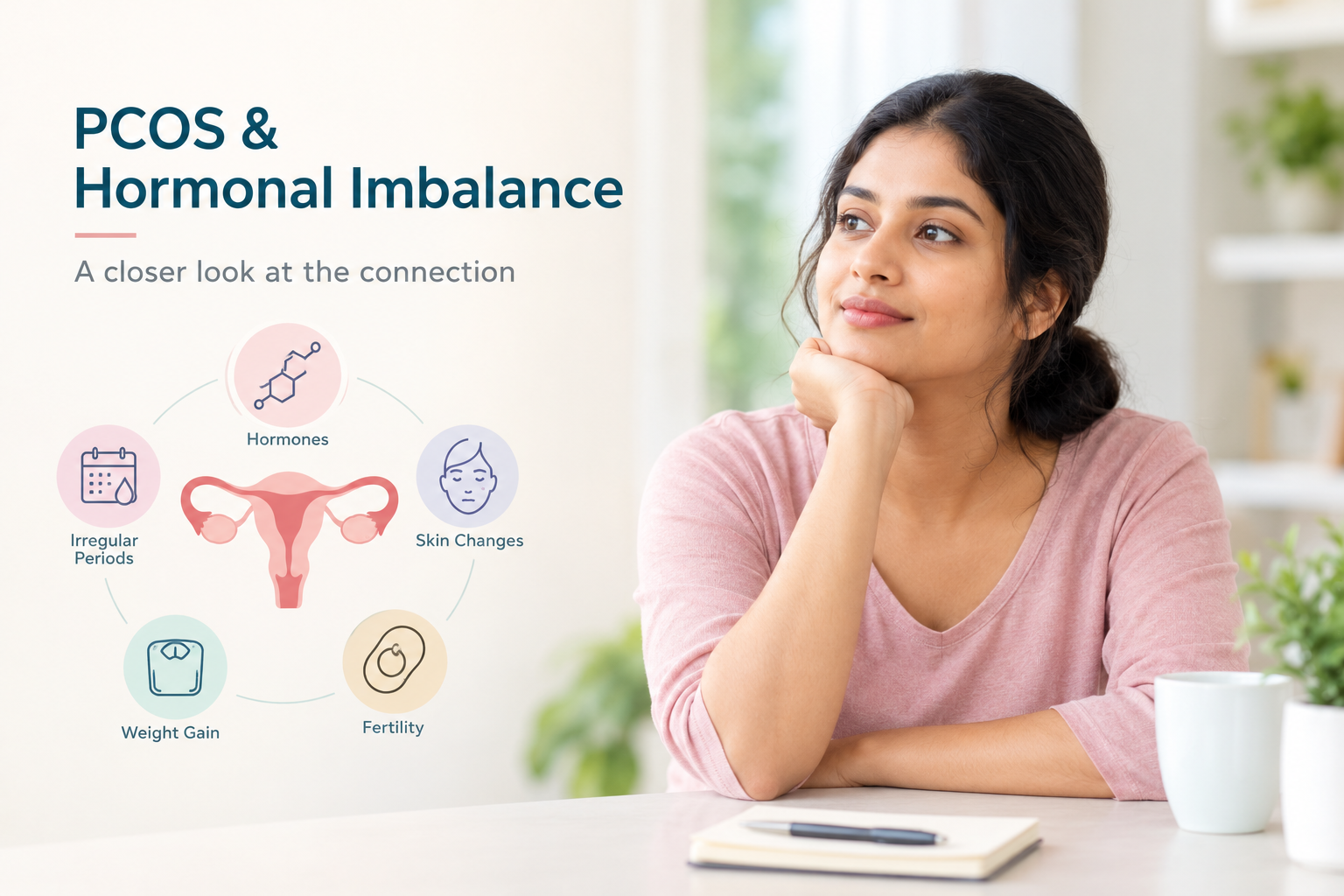
If your periods have become unpredictable, your skin keeps breaking out, or your weight is rising for no clear reason, these may not be separate problems. For many women, hormonal disruption linked to Polycystic Ovary Syndrome (PCOS) is the common thread. PCOS is one of the most frequent hormonal disorders in women of childbearing age, and its effects reach the ovaries, skin, hair, and metabolism.
The symptoms vary widely, so many women go years without a diagnosis. Learning how hormones drive the condition makes it easier to recognise the signs and act on them.
Women looking for the Best PCOS and Obesity Clinic in Kollam can start by understanding how PCOS, hormones, and metabolism work together.
PCOS in Brief
PCOS is a combined hormonal and metabolic disorder that alters how the ovaries behave. It typically involves irregular or missing ovulation, higher-than-usual androgen levels (the hormones often labelled “male”), and ovaries that look different on an ultrasound.
The name is misleading. Many women with PCOS have no true ovarian cysts. The tiny fluid-filled dots seen on a scan are generally immature follicles that never developed fully.
No two women have exactly the same experience. One may only have irregular periods, another may mostly struggle with acne or unwanted hair, and a third may find her weight hard to manage. Some have all of these at once. This is why treatment needs to be personalised.
The Hormones Behind PCOS
Hormones carry instructions around the body, telling it when to ovulate, how to use energy, and how to keep the reproductive system running. PCOS upsets several of these signals.
Androgens: Women produce small amounts of androgens naturally. In PCOS, the ovaries may make too much, a state called hyperandrogenism. The results can include:
- Extra facial or body hair
- Acne that does not clear
- Oily skin
- Thinning hair on the scalp
- Irregular ovulation
How noticeable these are depends on the woman’s androgen levels and how strongly her body reacts to them.
Insulin: This hormone lets cells take in glucose for energy. With insulin resistance, cells respond poorly, so the pancreas releases more insulin to compensate. The excess can prompt the ovaries to produce more androgens, which can make symptoms worse. Insulin resistance is common in PCOS but not universal, and over the years it can raise the risk of type 2 diabetes.
LH and FSH: The pituitary gland releases these two hormones to steer the ovaries and trigger ovulation. In some women with PCOS their balance shifts, which can disturb follicle growth and prevent an egg from being released. This shift is not found in every woman with PCOS, and it cannot diagnose the condition on its own.
Oestrogen and progesterone: Together they manage the menstrual cycle. Progesterone usually rises after ovulation to prepare the uterine lining for pregnancy. When ovulation is irregular or does not happen, progesterone can stay low, and the lining may not shed on time. That leads to late, sparse, or skipped periods.
Signs That Hormones May Be Out of Balance
PCOS can announce itself in different ways:
- Cycle changes: Periods may come rarely, arrive unpredictably, or vanish for months.
- Hair where you do not want it: Raised androgens can cause growth on the face, chest, or abdomen.
- Persistent acne: Extra oil production often shows up along the jawline and face.
- Scalp hair loss: Androgen activity can gradually thin the hair.
- Weight difficulties: Gaining weight is easier and losing it harder, especially with insulin resistance. Women of normal weight can still have PCOS.
- Trouble conceiving: Without regular ovulation, fertile days are hard to predict.
Very few women have every symptom. Even one or two persistent signs are worth discussing with a doctor.
The Weight Connection
Obesity and PCOS often appear together, but one does not simply cause the other, and women of every size can have PCOS.
Fat stored around the abdomen tends to encourage insulin resistance. In a woman who already has PCOS, that can intensify the hormonal imbalance. It can become a loop: insulin resistance raises androgens, and the hormonal changes make weight loss harder.
PCOS is not just the result of gaining weight. Genes, hormonal control, and metabolism all play a part. Good care therefore looks at overall health and not only at the scale.
Getting a Diagnosis
No single test confirms PCOS for everyone. Doctors piece the picture together from several sources:
- History and examination: Questions about cycle patterns, weight changes, acne, hair growth, and family history, along with checks such as blood pressure.
- Blood tests: These measure androgens and help exclude other conditions that mimic PCOS. Glucose, cholesterol, and thyroid function may also be tested.
- Pelvic ultrasound: It shows the ovaries and any other reproductive concerns, though it is not always necessary if other criteria are already met.
- Metabolic screening: Because metabolic problems often accompany PCOS, doctors may check blood glucose, screen for diabetes, and review a lipid profile.
The tests chosen depend on each woman’s symptoms and medical background.
How PCOS Is Managed
The aim is to ease symptoms, improve hormonal and metabolic health, and respect the woman’s own goals, including whether she hopes to become pregnant. Age, symptoms, and history all shape the plan.
- Lifestyle: Balanced meals, regular movement, good sleep, and stress management benefit metabolic health. In overweight women, gradual and sustainable weight loss can improve insulin sensitivity and bring cycles closer to regular. Small changes matter.
- Hormonal medicines: Contraceptive pills may be prescribed to regulate periods and reduce acne and excess hair. Other medicines may be used depending on the symptoms.
- Insulin-sensitising medicines: Metformin, for example, can help selected women, particularly those with insulin resistance. It should be taken only under medical supervision.
- Fertility treatment: Women who cannot conceive because of irregular ovulation may need a fertility assessment, and doctors may suggest ovulation-inducing medicines or assisted reproduction.
Regular reviews show whether the plan is working and allow adjustments.
Looking Ahead: Long-Term Health
PCOS affects more than day-to-day symptoms. It may be associated with:
- Type 2 diabetes
- High blood pressure
- Unhealthy cholesterol levels
- Sleep-related breathing problems such as obstructive sleep apnoea
- Difficulty conceiving
- Endometrial hyperplasia (thickening of the uterine lining) when periods are very infrequent
The level of risk differs from woman to woman. Routine screening and follow-up can catch problems early.
When to Book an Appointment
See a doctor if you have ongoing irregular periods, unexplained changes in weight, heavy facial hair growth, severe acne, or trouble getting pregnant.
Do not wait if your periods have been absent for several months. Long gaps may call for treatment to protect the uterine lining.
An early visit helps find the cause, rule out other conditions, and start a suitable plan.
Getting the Right Support
PCOS is a long-term condition, but with proper medical care and lifestyle changes that last, most women can keep their symptoms under control. Understanding the hormonal picture, watching metabolic health, and following a plan built around you can improve your well-being considerably.
At Samad Hospital, women can receive medical guidance on hormonal health, PCOS, and weight management. A full evaluation helps identify what each woman needs and which treatments suit her.
When choosing the Best PCOS and Obesity Clinic in Kollam, look for a team that treats hormones and metabolism together rather than handling each symptom in isolation. With timely assessment, regular follow-up, and lifestyle support, women with PCOS can work towards better long-term health.
If you notice signs of PCOS or hormonal changes you cannot explain, the medical team at Samad Hospital can help you understand what is happening and discuss your options.
Leave a Comment